Understanding Manual Car Seat Issues
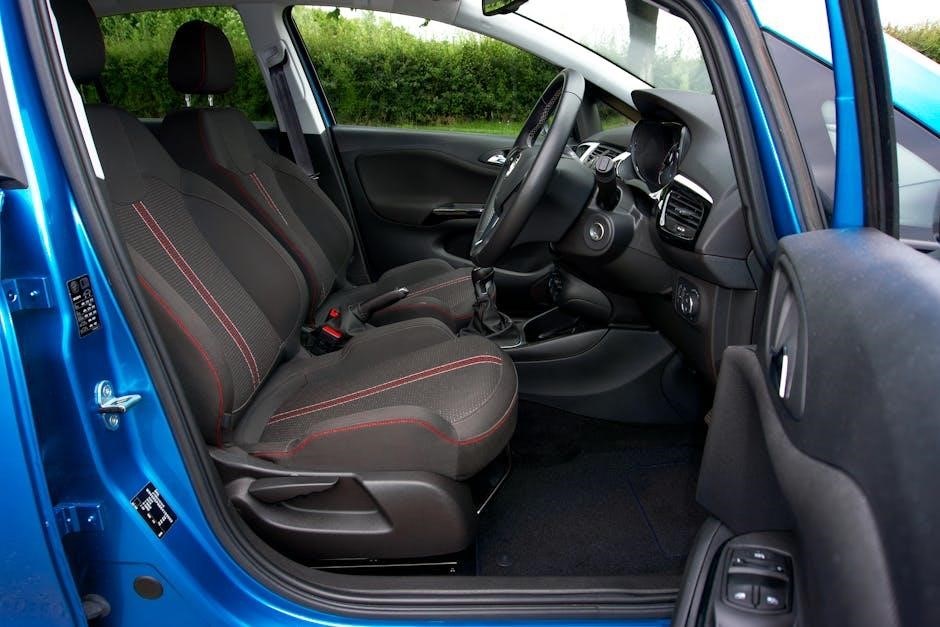
Many drivers experience issues with manual car seats failing to adjust, often getting stuck or refusing to move forward or backward. This can stem from various mechanical problems, impacting comfort and safety.
Common Causes of Seat Stuckness
A frustrating scenario is a manual car seat that refuses to budge, particularly when attempting forward or backward adjustments. Several common culprits contribute to this issue. Often, obstructions beneath the seat – dropped items like coins, pens, or even small tools – physically block the seat’s travel along the rails. Debris accumulation, including dirt, dust, and grime, within the seat rails themselves, creates friction and impedes smooth movement.
Furthermore, the manual adjustment mechanism, typically involving cables and levers, can become worn, frayed, or disconnected over time. Corrosion on the seat tracks, especially in regions with harsh weather conditions, adds significant resistance. A malfunctioning release lever or handle, responsible for disengaging the locking mechanism, prevents the seat from sliding. Finally, internal damage to the seat rail assembly, potentially from impact or wear, can cause binding and complete immobility. Identifying the specific cause is crucial for effective troubleshooting.
Identifying the Type of Manual Seat Mechanism
Understanding your car seat’s adjustment system is key to diagnosing why it’s stuck. Most manual seats utilize a cable-actuated system, where pulling a lever stretches or releases a cable connected to the seat rails, allowing movement. These cables can become frayed or detached, hindering operation. Another common design employs a direct mechanical linkage, with the lever directly connected to a gear or ratchet mechanism that moves the seat.
Some older vehicles may feature a simpler, entirely mechanical system with a locking pin and a series of notches in the seat rails. Identifying which system your vehicle uses dictates the troubleshooting approach. Inspect the area around the adjustment lever for visible cables or linkages. If none are apparent, it’s likely a direct mechanical or notch-based system. Knowing the mechanism helps pinpoint potential failure points and guides repair efforts.

Troubleshooting Steps: Initial Checks
Begin by thoroughly checking for any obstructions beneath the seat and along the rails. A simple visual inspection can often reveal the cause of the issue.
Checking for Obstructions Under the Seat
The first step in diagnosing a stuck manual car seat is a meticulous search for obstructions underneath. Often, dropped items like coins, pens, small toys, or even food debris can wedge themselves into the seat rails or the mechanism itself, preventing smooth movement. Use a flashlight to thoroughly illuminate the area, carefully inspecting every inch of the space beneath the seat.
Feel around with your hands, cautiously probing for anything that shouldn’t be there. Pay close attention to the areas where the seat rails slide and the points where the seat connects to the vehicle’s frame. Sometimes, a seemingly insignificant object can create a significant blockage. Don’t forget to check for anything lodged within the seat track covers, if applicable. Removing any found obstructions is crucial before proceeding to more complex troubleshooting steps, as it’s often the simplest solution to restore seat functionality.
Examining the Seat Rails for Debris
A closer inspection of the seat rails themselves is vital when a manual car seat is stuck. Over time, dirt, dust, and grime accumulate within the rails, creating friction and hindering smooth sliding action. This debris can combine with old lubricant, forming a sticky paste that further impedes movement. Visually inspect the rails for visible buildup, and run your hand along them to feel for roughness or resistance.
Use a vacuum cleaner with a crevice tool to remove loose debris from the rails. For stubborn grime, a stiff brush and a mild cleaning solution (avoid harsh chemicals!) can be employed. Ensure the rails are thoroughly cleaned and dried before attempting to move the seat. Pay particular attention to the areas where the rails overlap and intersect, as these are common collection points for debris. Clean rails are essential for restoring the seat’s ability to slide freely.
Inspecting the Release Lever/Handle
The release lever or handle is the primary control for adjusting a manual car seat, so a thorough inspection is crucial. Begin by verifying the lever moves freely and isn’t obstructed by anything. Check for any visible damage to the lever itself, such as bending or breakage. Sometimes, the linkage connecting the lever to the seat mechanism can become disconnected or bent, preventing proper operation.
Attempt to operate the lever while simultaneously trying to move the seat. Listen for any clicking sounds, which might indicate the mechanism is attempting to release but is being held back. If the lever feels loose or offers no resistance, the linkage may be the issue. A visual inspection under the seat, if accessible, can reveal the condition of the linkage. Ensure the lever is securely connected and functioning correctly before proceeding to more complex troubleshooting steps.

Deeper Dive: Mechanical Component Issues
Underneath the seat, worn cables, faulty rail mechanisms, and corroded tracks frequently cause movement restrictions. These internal components require detailed examination for proper diagnosis.
Worn or Broken Seat Cables
The operation of a manual car seat relies heavily on a system of cables that translate the lever’s movement into seat adjustments. Over time, these cables can become frayed, stretched, or even break entirely, leading to a seat that won’t move forward or backward, despite the handle operating correctly. This is a common culprit when the motor (if applicable for powered features like height adjustment) sounds like it’s working, but the seat remains stubbornly fixed.
Identifying a cable issue often requires visual inspection. Accessing the cables usually involves removing the seat from the vehicle – a task best left to those comfortable with car mechanics. Look for signs of wear, such as fraying, rust, or broken strands. Even if a cable isn’t completely broken, significant wear can prevent it from effectively transmitting the force needed to move the seat. Replacing these cables is often a straightforward repair, but requires careful routing and tensioning to ensure proper function. Ignoring worn cables can lead to complete seat immobility and potentially compromise safety if the seat cannot be adjusted to a comfortable and secure driving position.
Faulty Seat Rail Mechanisms

Manual car seats glide along a series of rails and mechanisms that allow for forward and backward movement. These components, subjected to constant use and weight, can become faulty over time, hindering the seat’s ability to adjust. Issues can range from simple obstructions to significant mechanical failures within the rail system itself.
A common problem is corrosion, particularly in vehicles exposed to moisture or road salt. Rust can build up on the rails, creating friction and preventing smooth movement. Bent or damaged rails, often resulting from impact or excessive force, can also cause the seat to bind. Furthermore, the locking mechanisms that secure the seat in place can malfunction, preventing release and subsequent adjustment. Inspecting these rails requires careful examination for any visible damage, corrosion, or obstructions. Repairing or replacing a faulty seat rail mechanism often involves removing the seat and potentially disassembling parts of the rail assembly, demanding mechanical expertise.
Damaged or Corroded Seat Tracks
The seat tracks, fundamental to a manual car seat’s operation, are vulnerable to damage and corrosion, directly impacting its ability to move. Constant use, combined with exposure to the elements and potential debris, can lead to significant wear and tear. Corrosion, especially in regions with harsh winters or coastal climates, is a frequent culprit, causing rust to accumulate on the tracks.
This rust creates friction, making it difficult to slide the seat forward or backward. Physical damage, such as bending or warping of the tracks, can occur from impacts or improper handling. Even small dents can disrupt the smooth gliding motion. Inspecting the tracks involves visually checking for rust, bends, or any signs of physical damage. Addressing this issue often requires cleaning off corrosion with a wire brush and lubricant, or, in severe cases, replacing the entire seat track assembly. Ignoring damaged or corroded tracks can lead to complete seat immobility and potentially compromise safety.

Advanced Troubleshooting & Potential Repairs
More complex fixes involve lubricating mechanisms, replacing worn seat cables, or, if damage is extensive, a complete seat rail assembly repair or replacement.
Lubricating the Seat Rails and Mechanisms
Often, a stuck manual car seat isn’t due to a broken component, but rather a lack of lubrication. Over time, dirt, dust, and grime accumulate on the seat rails and internal mechanisms, creating friction that prevents smooth movement. Begin by thoroughly cleaning the rails with a vacuum cleaner and a brush to remove loose debris.
Next, apply a silicone-based lubricant – avoid oil-based products as they can attract more dirt. Spray the lubricant along the entire length of the seat rails, both upper and lower. Operate the seat adjustment lever repeatedly to work the lubricant into the mechanism.
Don’t forget to lubricate the release lever or handle itself, as this can also become stiff. If the seat still resists movement after lubrication, repeat the process, allowing the lubricant to penetrate for a longer period. Ensure you wipe away any excess lubricant to prevent it from attracting further debris.
Replacing Seat Cables
If lubrication fails to resolve the issue, worn or broken seat cables are a likely culprit, especially if you hear clicking but no movement. Accessing these cables usually requires removing the seat from the vehicle – disconnect the battery first for safety! Carefully trace the cable’s path from the adjustment lever to the seat rail mechanism.
Once located, disconnect the old cable. Note its routing to ensure correct installation of the new one. New cables are typically available from auto parts stores, often requiring the vehicle’s make and model for a precise fit.
Install the new cable, carefully following the original routing. Ensure it’s securely connected at both ends and that it doesn’t bind or snag during operation. Reconnect the seat and test the adjustment mechanism thoroughly before considering the repair complete. Proper cable tension is crucial for smooth operation.
Repairing or Replacing the Seat Rail Assembly
When the seat rail assembly itself is damaged or severely corroded, repair can be complex, and replacement is often the most practical solution. Begin by thoroughly inspecting the rails for bent or broken components, and significant rust; Minor corrosion might be treatable with a wire brush and rust converter, followed by lubrication.
However, extensive damage necessitates a full assembly replacement. This typically involves removing the entire seat and disconnecting all associated wiring and cables. Sourcing a replacement rail assembly requires knowing your vehicle’s exact year, make, and model.
Installation involves reversing the removal process, ensuring all bolts are tightened to the manufacturer’s specifications. Test the seat’s full range of motion after installation to confirm proper functionality and stability. A faulty rail assembly compromises safety, so meticulous work is essential.

Safety Precautions & When to Seek Professional Help
Always disconnect the battery before working on car seats. If you’re uncomfortable or encounter complex issues, consult a qualified mechanic for safe repairs.
Disconnecting the Battery Before Working
Prior to initiating any repair work on your manual car seat mechanism, disconnecting the vehicle’s battery is a crucial safety precaution. This simple step minimizes the risk of accidental electrical activation of the seat’s motor or other electrical components while you are working within close proximity. Even with a manual seat, there can be electrical connections for other features.
Locate the negative terminal of your car battery – it’s typically marked with a (-) symbol and often covered with a black cap. Using a wrench of the appropriate size, carefully loosen the nut securing the negative cable to the terminal. Once loosened, gently remove the cable from the terminal, ensuring it doesn’t accidentally make contact again. Secure the cable away from the terminal to prevent accidental reconnection.
Remember to have your radio security code handy if required, as disconnecting the battery may reset your radio. After completing the repairs, reconnect the negative cable securely to the terminal, tightening the nut firmly. This precaution safeguards against potential electrical hazards and ensures a safer repair process.
Recognizing When the Issue is Beyond DIY Repair
While many manual car seat issues are addressable with basic tools and knowledge, certain situations necessitate professional intervention. If, after thorough inspection and attempted troubleshooting – including lubrication and cable checks – the seat remains immobile, a more complex underlying problem may exist.

Significant corrosion on the seat tracks or rail assembly, extensive damage to the internal mechanisms, or a completely broken seat frame are indicators that the repair exceeds typical DIY capabilities. Attempting to force a severely stuck seat can cause further damage, potentially compromising its structural integrity and safety.
If you lack confidence in your mechanical skills, or if the issue involves welding or specialized tools, it’s best to consult a qualified automotive technician. They possess the expertise and equipment to diagnose and repair the problem safely and effectively, ensuring your seat functions correctly and maintains passenger safety.

Tools Needed for Manual Car Seat Repair
Essential tools include a socket wrench set, pliers, screwdrivers, penetrating oil, and a flashlight. Additional helpful items are a shop manual and work gloves.
Essential Tools List

Successfully tackling a stuck manual car seat requires a focused selection of tools. A socket wrench set, encompassing both metric and standard sizes, is paramount for disassembling seat components and accessing internal mechanisms. Pliers, including needle-nose and standard varieties, prove invaluable for gripping, bending, and manipulating cables or small parts.
A comprehensive screwdriver set – featuring Phillips head, flathead, and potentially Torx bits – is crucial for removing various screws and fasteners. Penetrating oil, like WD-40 or PB Blaster, is essential for loosening corroded or stuck bolts and freeing up seized mechanisms. A bright flashlight, or even better, a headlamp, illuminates dark and confined spaces under the seat.
Don’t underestimate the value of work gloves to protect your hands from sharp edges and grime. A small pry bar can assist in gently separating stuck components. Finally, having a shop manual specific to your vehicle provides detailed diagrams and instructions, significantly simplifying the repair process.
Optional but Helpful Tools
While a core set of tools is essential, several optional items can significantly streamline manual car seat repair. A rubber mallet proves useful for gently persuading stuck components without causing damage. A mechanic’s mirror, attached to an extendable handle, allows inspection of hard-to-reach areas beneath the seat. Cable fishing tools, typically used in electrical work, can aid in routing new seat adjustment cables.
An impact driver can be a lifesaver for stubborn, rusted bolts that resist traditional wrenching. A multimeter is helpful if you suspect an electrical issue affecting the seat’s power (even in manual seats, some features may be powered). A seat rail cleaning brush helps remove accumulated dirt and debris.
Finally, a digital camera or smartphone for documenting disassembly steps is invaluable for reassembly. Having a small container to organize removed screws and parts prevents confusion and ensures a smoother repair process. These additions elevate the repair experience from challenging to manageable.